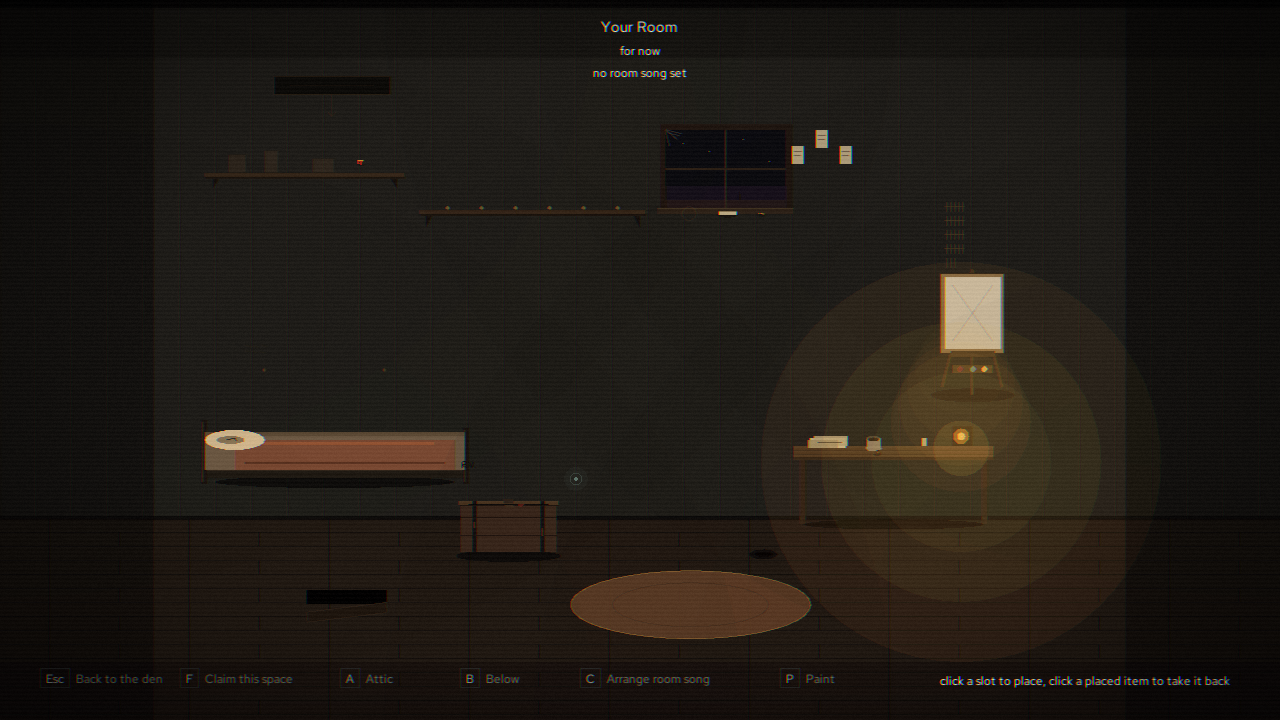
Claim the space.
Finishes, furniture touches, and keepsake placement let the room stop feeling borrowed and start feeling inhabited.
a lantern-lit narrative scavenger game
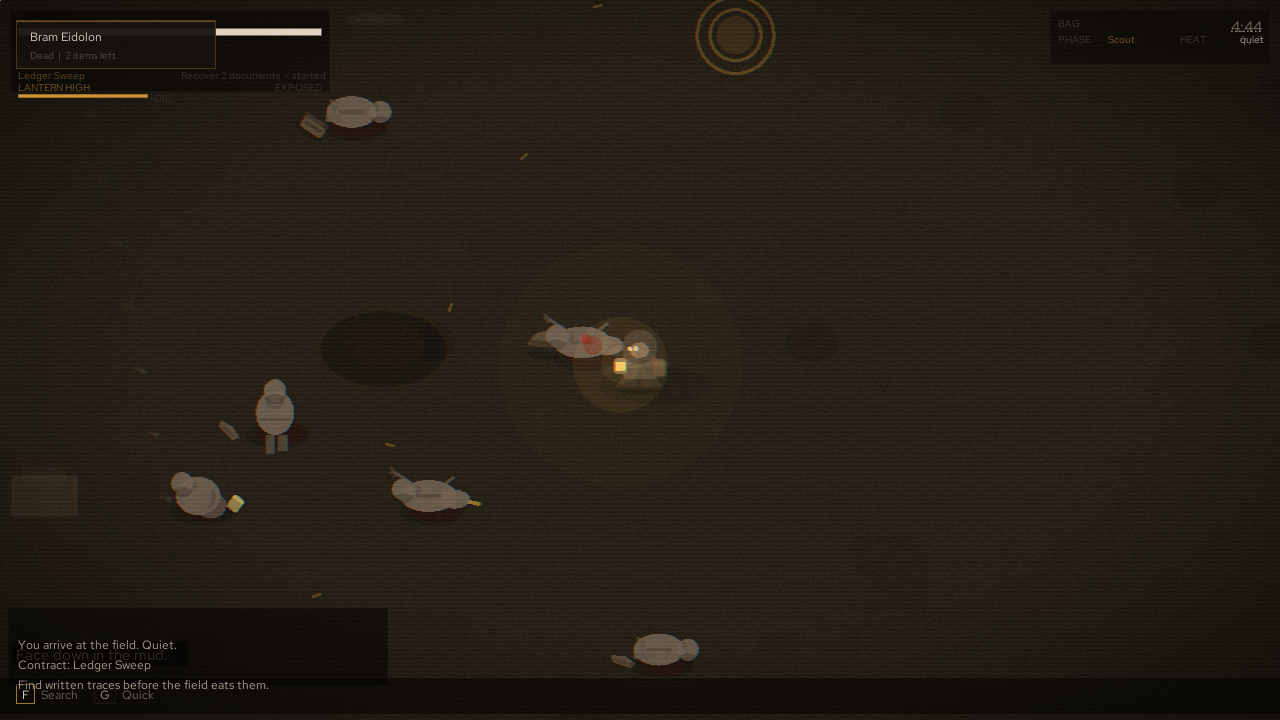
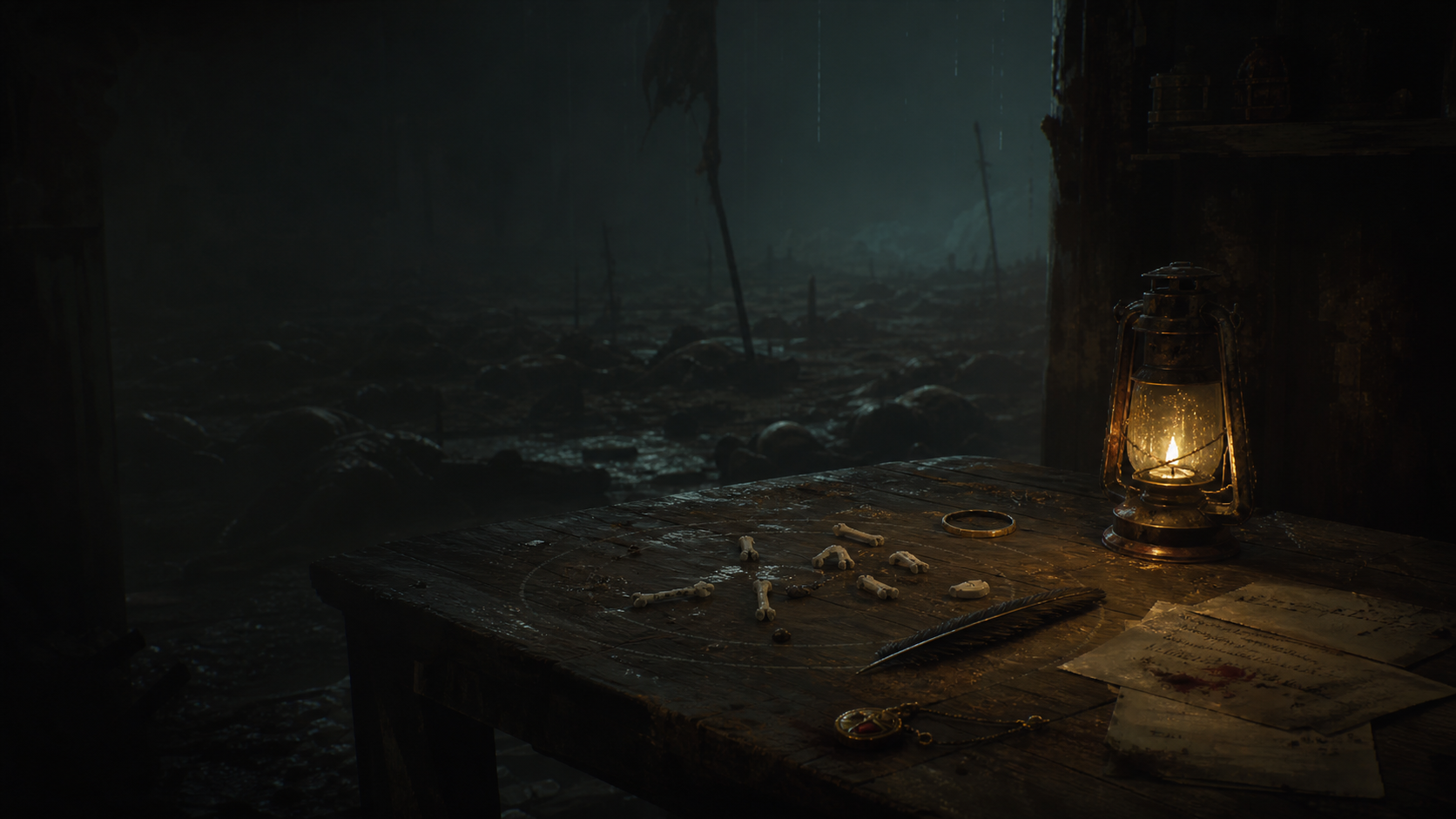
Walk a battlefield that remembers you. Read the dead before you touch them. Bring their things home to Maggie, where every return becomes part confession, part ritual, part investigation. Then go upstairs and make the borrowed room yours until the game starts answering back.
The dead knew each other. The field keeps proving it. Every letter, ring, ledger scrap, bell tongue, and improvised charm can tie one body to another. Every return to Maggie sharpens the web. The game keeps asking what you carry home, what you leave behind, and what kind of place you build around those decisions.
Observation is a real verb. Some bodies are dead, some are dying, some are dormant, and some are lying to you in ways a clean loot game never would.
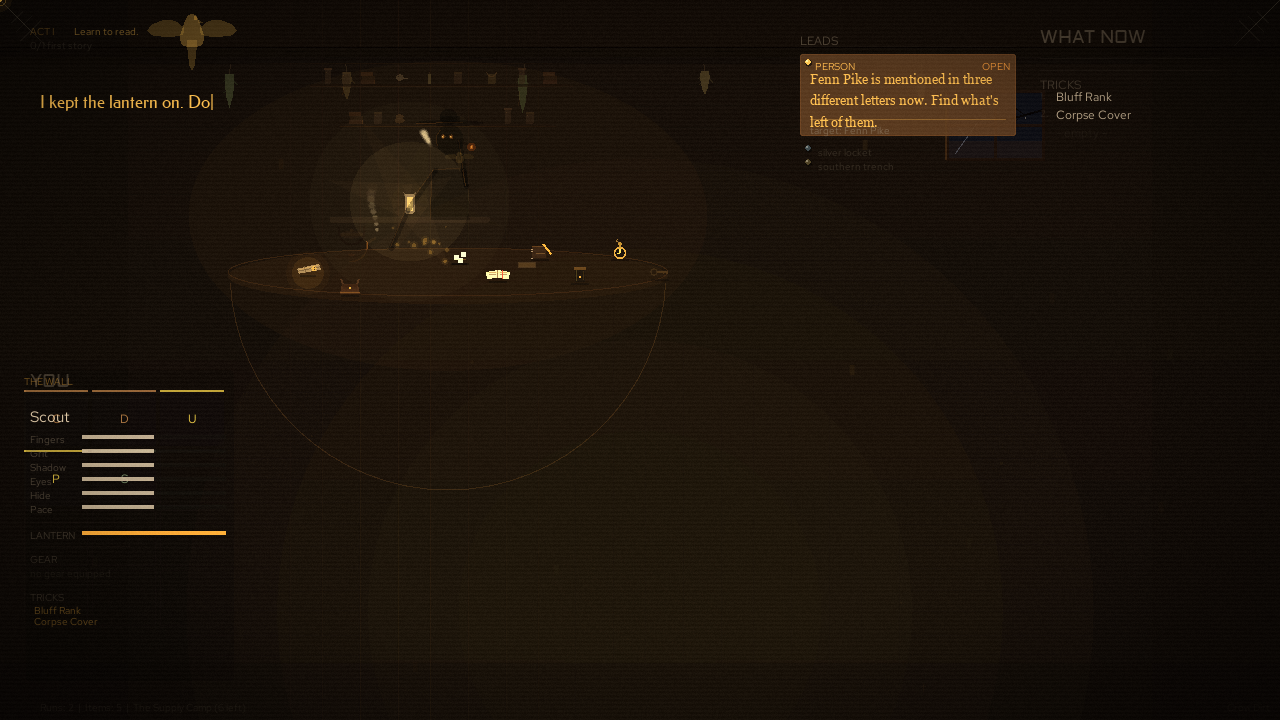
Every return recontextualizes the haul. Maggie reads the objects, the dossiers deepen, the leads mutate, and the game keeps tightening the thread between the dead, the field, and you.
Rivals strip bodies, traces accumulate, chapters exhaust a place instead of resetting it cleanly, and the return loop becomes the point rather than a failure state between runs.
Upstairs is a personal space with keepsakes, hidden hollows, room songs, paintings, attic and under-floor storage, and room finishes the game can notice.
Crow Dirt is a long return. The field, the den, the dossiers, the deploy board, the bones, the chapter structure, and the room upstairs all pull on one another. You do not simply finish a run. You come back changed, and the game keeps score in stranger ways than extraction.
A persistent battlefield with rivals, pressure, traces, clue weighting, and bodies that carry meaning before they carry loot.
Items are not generic pickups. They are authored fragments that can push Maggie, dossiers, leads, and chapter understanding forward.
The narrative backbone is a long chaptered structure. Returns matter because they accumulate proof.
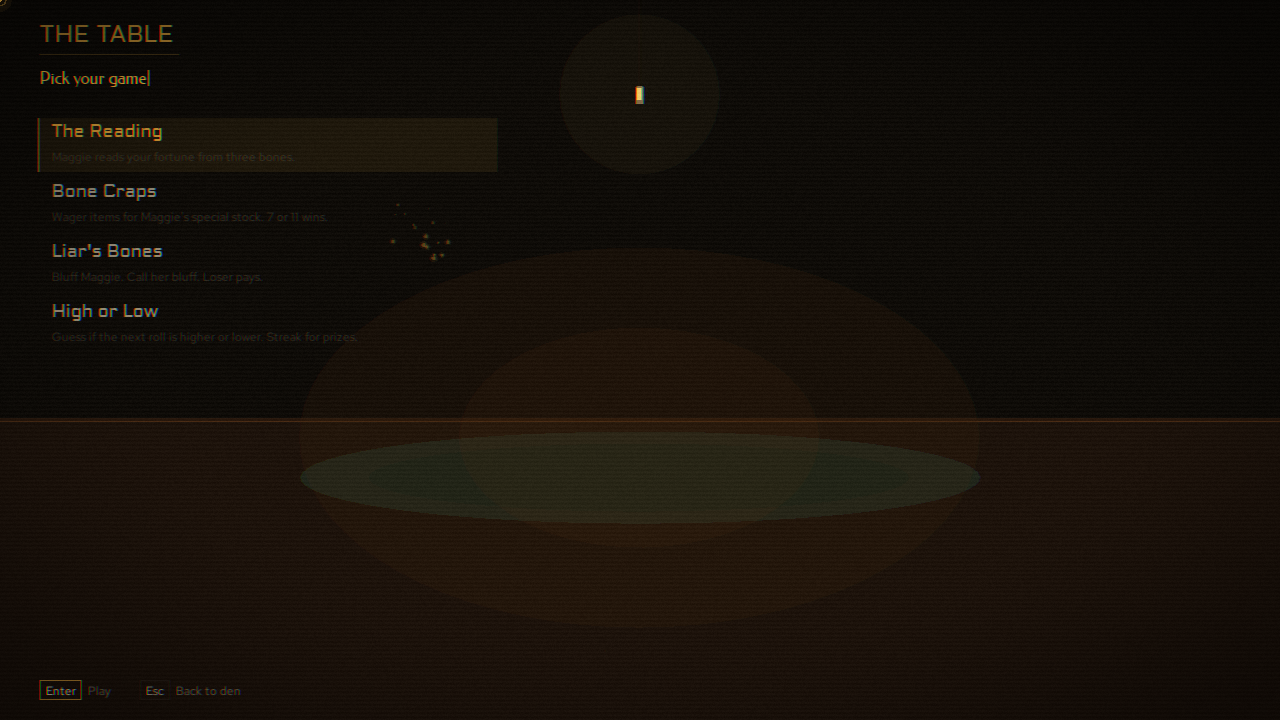
Deploy rituals, bones, and readings shape the next trip out. The house layer is not separate from the field layer. It is how you prepare to go back.
The game is about interpretation as much as action: what got seen, what got kept, what it means, and who is allowed to say so.
The ending is a slower, more deliberate funnel through everything you have made true.
Home is not a pause between outings. The room upstairs is a playable expressive layer: a place for keepsakes, paintings, instruments, hidden storage, attic crawl spaces, under-floor hollows, and little authored signs of ownership.
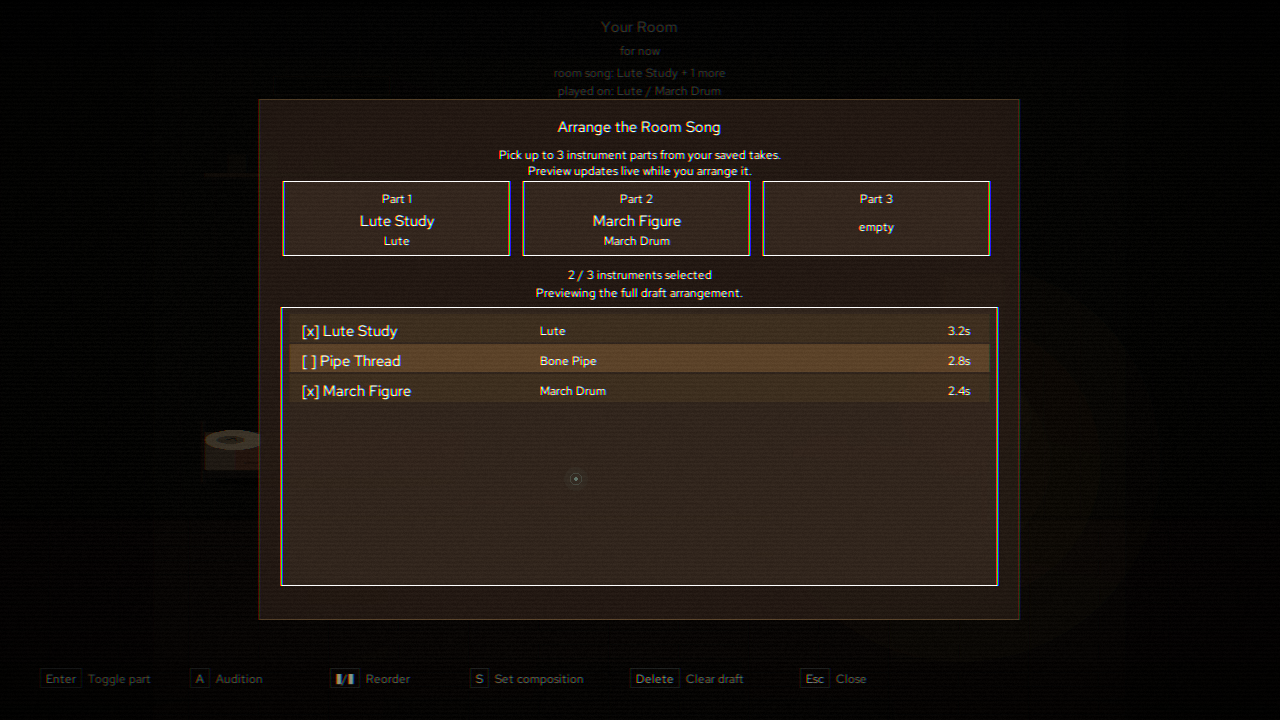
That matters because the game tracks it. Maggie can notice what you keep. The chronicler can notice what you paint. The room can carry a song. Salvage can unlock finishes, furniture, and small personal arrangements. It is not decoration on top of the story. It is another way the story is being told.
Finishes, furniture touches, and keepsake placement let the room stop feeling borrowed and start feeling inhabited.
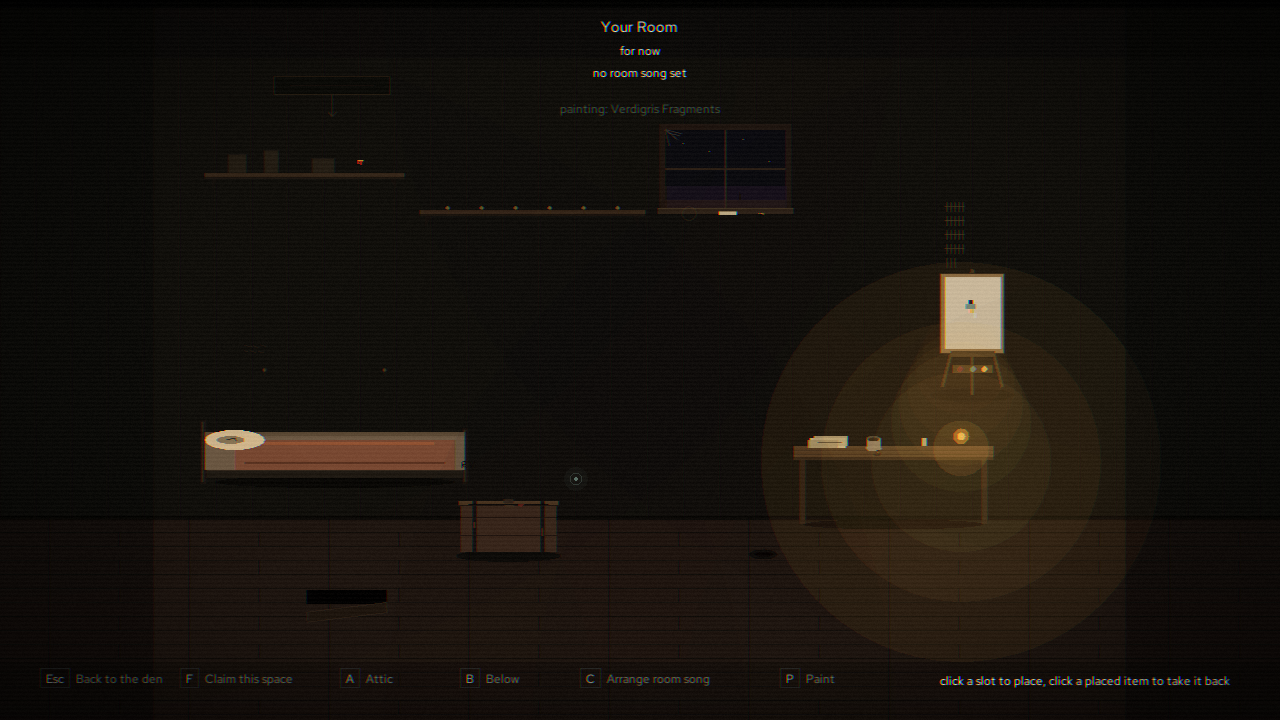
A pixel canvas upstairs lets you make paintings the game can summarize, remember, and fold back into Maggie's reactions.
Saved takes can become a composition that lives in the room itself. Crow Dirt treats recovery and making as part of the same story.
Crow Dirt is a narrative scavenger game about what the field leaves on you, what Maggie can read in what you bring home, and what kind of life you build around the dead. If that sounds like your kind of game, come a little closer.